Bringing Leadership and Team Development to Life with the Work Personality Index®
5-minute read
Written by: Mark Fitzsimmons, President
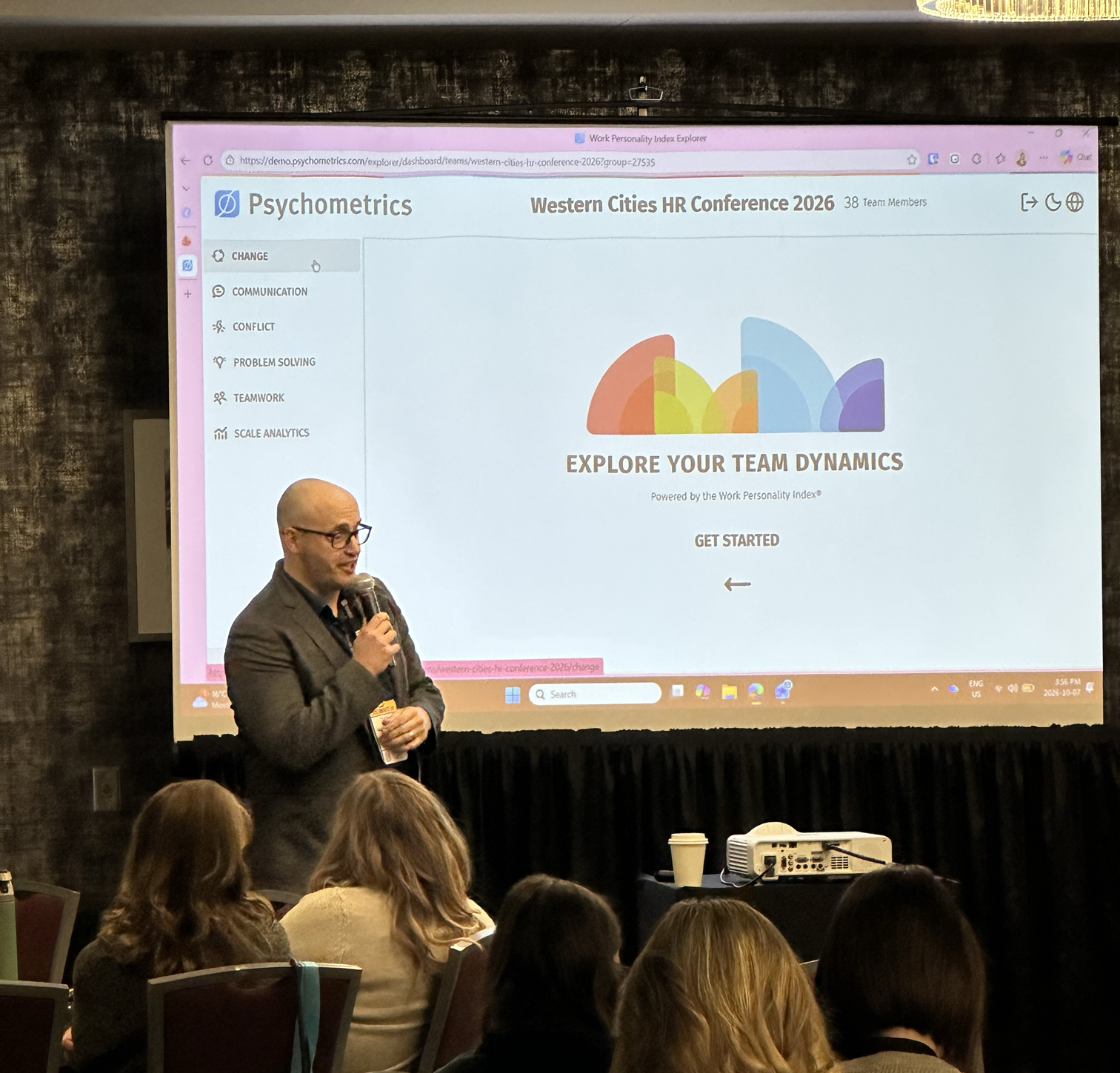
Last month I had the pleasure of speaking at the Western Cities HR Conference about building a leadership pipeline and how the Work Personality Index® (WPI) can be used to identify and develop high potentials in organizations.
I was joined by Bobbi Chamberlain, CHRO for the City of Grande Prairie, and Thomas Slifka, Principal of Blue-Chip Strategies. Bobbi shared how the City developed its Municipal Leadership Academy (MLA) to build leadership capacity, while Thomas shared his experience using the Work Personality Index to support self-awareness and team effectiveness during his time working at the City.
The session gave participants an opportunity to explore their own WPI results and see firsthand how differences in personality can influence the way people work together.
Read how the City developed an experiential learning program to address leadership gaps and create more opportunities for employees to grow into leadership roles.
Exploring Personality Differences with the Work Personality Index
Everyone attending the conference session had the opportunity to complete the Work Personality Index® (WPI) and the results were brought to life by Thomas who engaged participants and had them moving around the room. One of his team activities was to select a few people to line up against a wall to demonstrate where they scored on individual traits. In one example he used the Social Confidence scale.
Work Personality Index - Social Confidence
The Social Confidence scale measures the individual’s tendency to be self-assured and at ease with people in all types of social situations.
| High scorers tend to: | Lower scores tend to: |
|---|---|
| Be comfortable in social situations Be socially confident Have a self-assured personal style Enjoy being the centre of attention | Feel awkward in social situations Lack social-confidence Be timid with new people Do not enjoy being the centre of attention |
Source: Work Personality Index 2.0 Revised Manual
While the group of 42 people in the session had a normal distribution on the Social Confidence Scale, the seven selected participants were much less evenly distributed. Six of them had a score of higher than 6, and one individual had a score of 2.
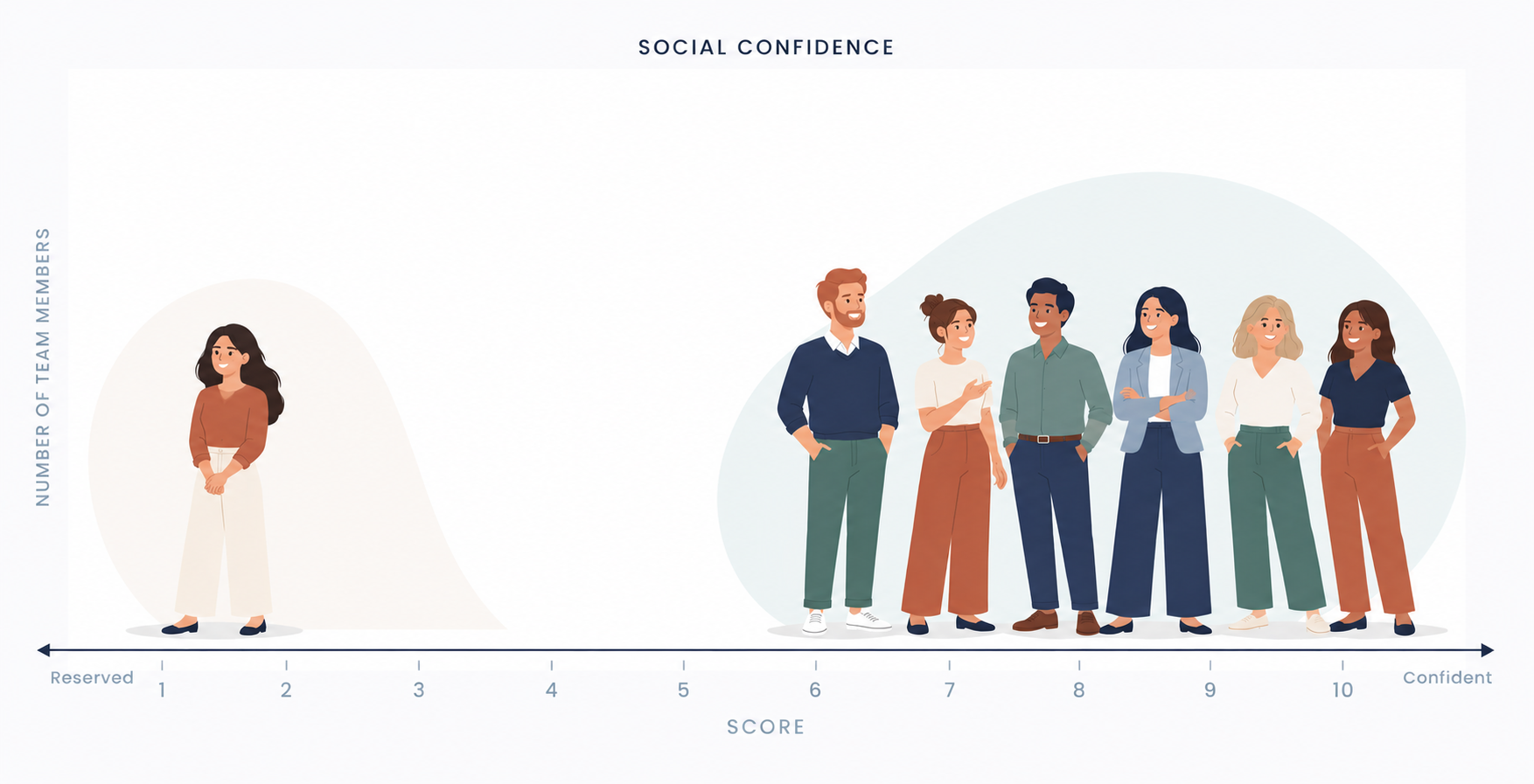
This activity was a great way to visualize the different styles in the group and spurred conversation about the impact personality has on how a person approaches tasks and certainly some laughs about conference networking!
For leaders and HR professionals, a similar activity can help team members recognize and appreciate different approaches to workplace interactions. For example, someone with high Social Confidence may be comfortable speaking up in group discussions, while someone with lower Social Confidence may prefer time to prepare their thoughts before contributing.
Witnessing these differences can help leaders create opportunities for everyone to participate and contribute in ways that work for them.
Understanding Group Preferences with Team Dynamics
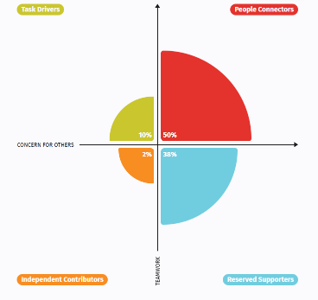
Individual assessment results can be added to Team Dynamics in real time, so we were able to quickly share aggregate group data during the conference session. We uncovered a trend, 88% of the people in the room scored high on Concern for Others - predictable at a Human Resource conference!
For HR professionals, having a high Concern for Others can be a real strength. After all, much of their work involves listening to employees, understanding their concerns, and helping them navigate workplace challenges. But could this same strength also create blind spots?
When employees come to HR with a problem, it can be tempting to focus on resolving their individual concerns. Sometimes, the situation calls for stepping back and considering the needs of the broader organization. Understanding these kinds of natural tendencies can help not just HR professionals , but all employees recognize when their approach is serving them well and when a different perspective might be needed.
Team Dynamics helps make these patterns visible, creating opportunities for teams to discuss how their shared preferences influence the way they make decisions and where different perspectives could add value.
Work Personality Index - Concern for Others
The Concern for Others scale measures how sensitive and understanding an individual is to the needs and feelings of others.
| High scorers tend to: | Lower scores tend to: |
|---|---|
| Be sympathetic and show concern for others Quickly pick up on the feelings of others Lend a helping hand and support colleagues Show a willingness to help people with their problems | Pay less attention to the personal feelings of others Be reluctant to get involved with individuals’ personal problems Miss minor cues that indicate what a person is feeling Take a more logical approach to solving problems Be more task oriented than people focused |
Western Cities HR Conference Session Attendees: Group Size 42
Putting Personality Insights into Practice with Your Teams
The activities at the Western Cities HR Conference highlighted how understanding individual differences and shared team preferences can lead to meaningful conversations about how people work together.
For HR and learning and development professionals, bringing these insights into group discussions can help teams build self-awareness, appreciate different perspectives, and identify opportunities to improve collaboration.
Consider trying it with your own teams, this Team Dynamics Leader's Guide provides practical activities and guidance for using Work Personality Index results to facilitate meaningful team discussions.
The Western Cities HR Conference was a great opportunity to connect with municipal human resource professionals from across Canada. I hope to see you next year in Saskatoon!